Showing posts with label waratah. Show all posts

Sunday, 25 October 2020

Gladys

It's not been a great year for waratah flowers, our state's floral emblem. Sometimes they're everywhere and looking glorious. This year they've been few and far between.


I did spot this flowering plant over the road though. It's looking a bit sad and past its prime. I'll call it Gladys.

Saturday, 28 September 2019

Muogamarra open day


The Muogamarra Nature Reserve is a national park with a difference, just north of Sydney. The main difference is that it's only open for a few weeks of the year, during August and September, and then only on weekends.


If that used to limit the visitorship and its impact, I think the opposite may have happened now. It's become hugely popular when it is open, because of the publicity its exclusivity gives it.


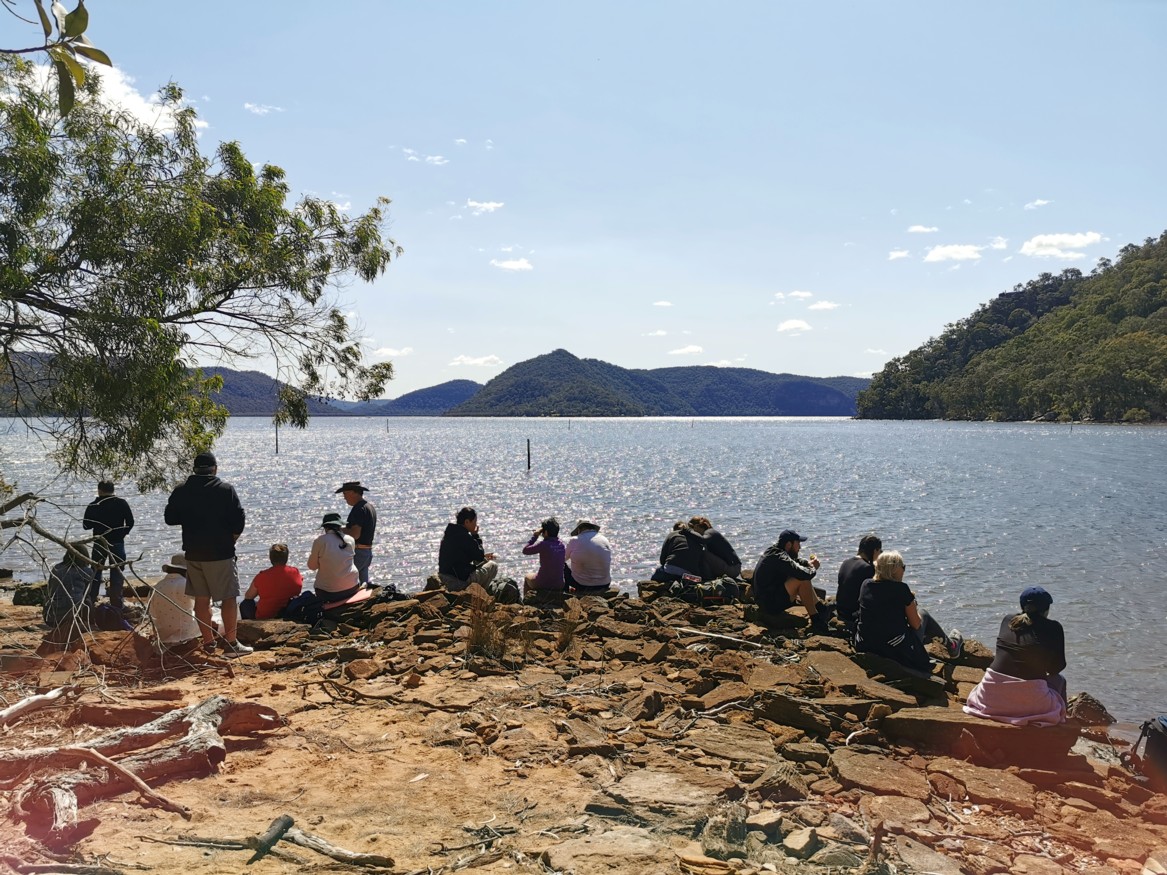
The bushwalkers were there a couple of weekends ago.


We did just about all of the walks on offer. One takes you down along the old Peats Ferry Rd, and past some mangrove swamps.


Peats Ferry Road naturally takes you to the site of the old Peats Ferry, where you would once have caught the ferry across the Hawkesbury and to the north.


It's waratah flowering time, of course, and there were indeed a few on offer. But 2019 doesn't seem to be a great year for waratahs.

Monday, 12 November 2018

Waratah blooms again, industrial relics and all

Waratah is an old mining town in Western Tasmania. It's said that at one time, its Mt Bischoff mine was the largest tin mine in the world. It was also the first town in Tasmania to have electric street lighting.

Not much going on in the 1970s and 80s, I noticed. But it seems to be looking up again. Tourists are passing through, and there's a nice feel to the place.


One of the things to do is to visit the old hydro-electric power station. Or at least, the relics of it. It's rather decrepit and unsafe, so they've officially closed the track down to it. But such tactics rarely discourage intrepid investigative bushwalkers.


You can read all about the Mt Bischoff mine at a vantage point overlooking the open cut. The mine was started in 1871 by James 'Philosopher' Smith, and it has been called the mine that built Launceston.


Sunday, 14 October 2018

First flowering


I've been planting waratahs now and again for the last few years. It's a notoriously difficult precious little thing, our state floral emblem. It prefers to do its thing in the wild, and tends not to co-operate with any but the greenest-thumbed gardeners.

A few years ago I tried some of the genuine natural native ones. They tormented me for a few years, staying just alive enough to keep me hopeful, but eventually dying anyway of course. Then a couple of years ago I tried again with some hybrids. Braidwood Brilliants, they're called. Hybrids are reckoned to be hardier and easier than the real deal ones. And after a tense recent few months of drought and frequent waterings, one my little beauties has finally come good. Look at this flower!

Monday, 5 October 2015

A walk called Bruce

I'd been hearing about this lost-and-found-again bushwalk for a while,and jumped at the chance to find it for myself the other day, with my Friday bushwalking group.


Bruce was the surname of the Railways Dept surveyor who originally planned the track in 1931, as a maintenance track for a new power line that the Railways had got the job of putting in. It went from Blackheath to Bullaburra in the Blue Mountains, and it was promoted as a bushwalking track until World War 2, when it somehow got forgotten. It became overgrown and lost, and parts of it stolen for other purposes. Then in more recent times it got rediscovered and renovated by various legendary bushwalkers. Its continued existence does not seem to be celebrated by the National Parks people, the Blue Mountains City Council people, or the maps people, all of whom probably just see it as an extra expense if they were expected to maintain it or map it. Today it can be negotiated from Medlow Bath (starting from the Katoomba airstrip) to Wentworth Falls, and then from the other side of Wentworth Falls to Bullaburra.

We like it though. It's big enough to feel you've done a bit, and you get to see hanging swamps, cliffs and canyons, thicker forest, and do at least five significant downs and ups of 100-200m or more, to cross the various creeks flowing north towards the Grose River. Some of it's along fire trails under the power line, but a lot of it is on perfectly pleasant walking track away from the power line a bit.

There were new and old relics to see along the way - mostly new fire service signs or bits of old power poles. This kept our accompanying historian Keith happy. We saw no snakes unfortunately (I love snakes), but mountain dragons and other little lizards were in attendance. There were waratahs in flower, plus Keith identified two rare and special flowers found only in the Upper Blue Mountains.


Although most of the track is easy to follow, sometimes with track markers every few metres, some of it isn't quite like that. We lost it at one stage for half an hour or so, while we thrashed about in the bush until we suddenly got lucky and hit on it again.

As usual, a good day out in the bush. I plan to put it on the regular programme of my bushwalking club at some stage soon, now that it's well and truly found again.

Read more on Wikipedia: https://en.wikipedia.org/wiki/Bruce's_Walk

Tuesday, 22 September 2015

Waratahs, Wollemi Pines, and the Illawarra Escarpment


It was the last Sunday in winter, and one of those glorious Sydney winter days. There were a ludicrous number of them this year. Where better to be than on the Illawarra Escarpment Walk, looking down on places like Stanwell Park, Colecliff, and Scarborough?

We were on the lookout for wild waratah flowers. Should have been some out by now, we thought, and we'd come across lots along here in the past. Our state's floral emblem can be a little unpredictable and elusive though.

We did come across one fine specimen, but it was in the garden of the cafe at Sublime Point, so maybe doesn't count.


One (somewhat unexpected) floral discovery was a Wollemi Pine tree. This is the 'dinosaur tree', not seen for 70 million years, since it went extinct in dinosaur times, or so they thought. It had been hiding from the dinosaurs in remote canyons in the Wollemi National Park until its rediscovery about 20 years ago. It has since come out of hiding, and managed to get itself widely propagated and dispersed around the joint, by the helpful modern humans. It doesn't plan to go extinct again any time soon.


Below: Looking south to Wollongong, Port Kembla, and beyond