Tuesday, 16 December 2014

Living on the edge in Sydney

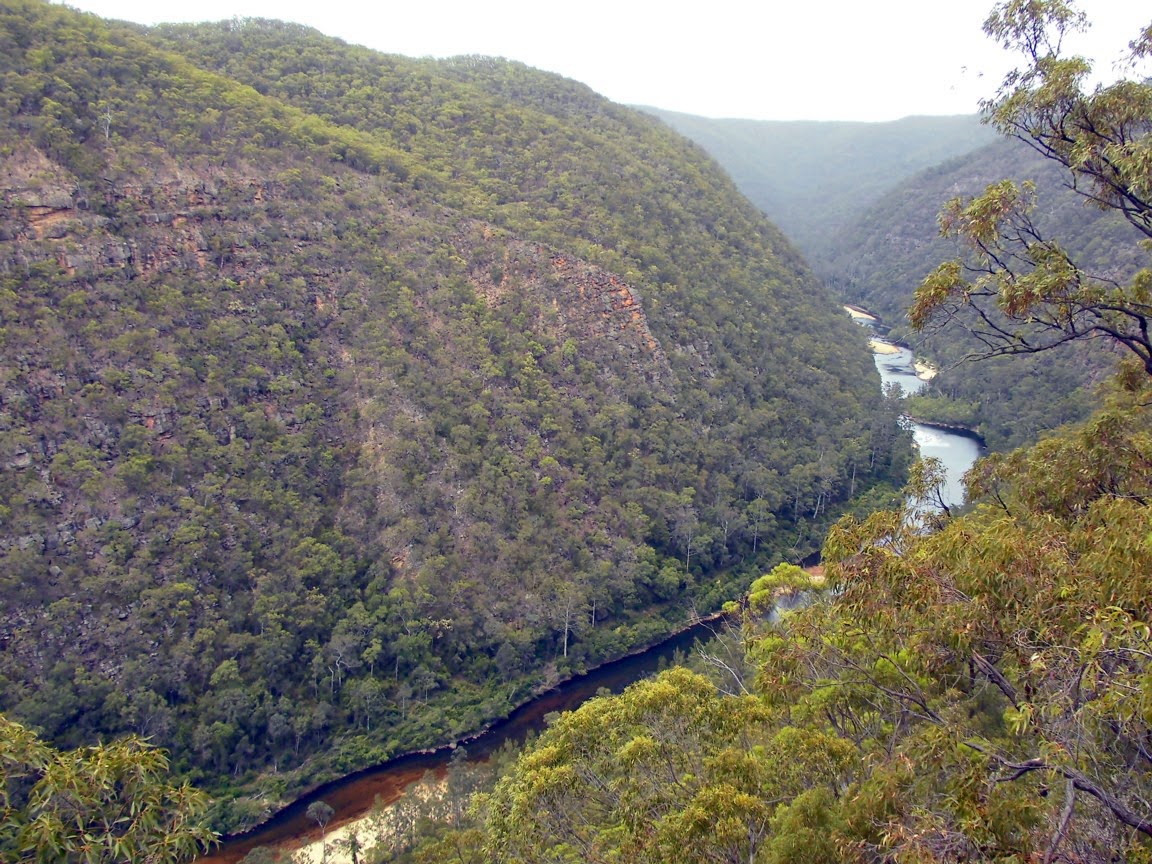
Or in this case, about 100km west of Sydney, at Wentworth Falls in the Blue Mountains.

Sydney was a bit on edge this week, after the events in Martin Place, but I'm still reliving my edge-of-the-world experiences at Lincoln Rock with my Thursday walking group the other day, and plotting the next one.


Funny, I actually don't feel that I take risks on clifftops or elsewhere, but we do look closer to the edge than it seemed at the time! But we stay calm, focussed, and stoic. And it generally works out fine.


Picture courtesy Saf Barbour

Friday, 12 December 2014

Once were islands

Bennelong Point used to be Bennelong Island, in the days when Sydney Harbour had 14 islands, or 13 or 12 or whatever the correct number is. Today it's got eight, and most of the rest have been joined to the mainland.

I went on a tour of the other islands that used to be. They are Garden Island, Berry Island, Darling Island, and Glebe Island.

And here are the pics:


Garden


Berry


Darling


Glebe


Monday, 8 December 2014

Ninth Island

A trivia quiz question that crops up now and again is: "How many islands are there in Sydney Harbour?" Then:  "Name them".

I distinctly remember being at one such quiz where the answer for the number was given as nine. The names were, in west to east order, given as: Rodd, Spectacle, Snapper, Cockatoo, Goat, Fort Denison, Garden, Clark, and Shark.

There's a problem or two here. Garden Island is no longer an island. It was joined to the mainland during World War 2. And if you're going to count other islands that are no longer islands, then you've got Berry Island too, Darling and Glebe Islands, and there's Bennelong Point of course, which became the site of a tram depot and later an opera house of some renown. And it seems that Spectacle Island used to be two islands, but got joined into one. Plus near Middle Head, there's Sow and Pigs Reef, which becomes an island during low tide.

Ninth Island, by the way, is the name of a rather good brand of wines from Northern Tasmania. I particularly recommend the pinot noir. I'd had an idea the name may have been somehow linked to my nine (or eight, or 12, or 13, or 14 or whatever) islands in Sydney Harbour. But no, it's
named after Ninth Island, in the Waterhouse Group in Bass Strait, not far from the vineyard.

So here's my Sydney Harbour Island quiz: name the seven that are pictured in this post, in the order that they're pictured.


A useful little guide to the islands, and how to get to them, is put out by the Australian Society for History and Technology. See here: http://ashet.org.au/images/All-islands.pdf

Monday, 1 December 2014

Life's a beach


And if you live in Sydney's Northern Beaches area, you've got lots of beaches to choose from. There are 22 in fact in the stretch Palm Beach to Manly. I know because I counted them as I walked the 33km walk recently.

Here's the list:  Palm, Whale, Avalon, Bilgola, Newport, Bungan, Basin (aka Bongin Bongin Bay), Mona Vale, Warriewood, Turimetta, North Narabeen, Narabeen, Collaroy, Fishermans, Long Reef, Dee Why, North Curl Curl, Curl Curl, Freshwater, Queenscliff, North Steyne, Manly.

Tuesday, 25 November 2014

Carry on up the Colo

You'd have to be utterly mad to do a strenuous bushwalk on a day when it's 45.3°C, as it was recorded to be in nearby Richmond the other day. 

Well that's exactly what a small group of us did: bush bashing, boulder hopping, descending 500m down to the Colo River and back up 500m, the lot! The majority had cancelled out in deference to the weather forecast, and the remaining four of us were all hoping the others would cancel too, but they didn't. So it had to be done!


We were very careful to drink vast amounts of water, we took all day over it, and had several cooling swims, in Tootie Creek and the Colo River below.

The Colo is quite a river. It snakes its way around the half million hectare Wollemi National Park and drains a huge area. It provides lots of opportunities for somewhat challenging bushwalking adventures, confusing navigational episodes, benightings, exhaustings, and even the odd uplifting getaway camping weekend. 


Our trip was otherwise a relatively routine one. Driving in from Mountain Lagoon we started on the T3 track, then branched off to the left and down to Tootie Creek through fairly open bush (thanks to the big fires last year). Then down the creek to the Colo, and up the T3 track back to the car. And wasn't it nice to make it back!

Monday, 17 November 2014

Getting around (trains and boats and planes, plus bikes, becaks and buses!)

Plenty of transport options in Central Java. There are comfortable and regular train services.


 There are punts to cross the rivers on when you're cycling in the countryside.


There are lots of airlines plying the many routes between and within the islands of the enormous Indonesian archipelago, and they don't crash nearly as often as they used to.


Within cities you often rely on the ojek (motorbike taxi). I was unsure of the best pillion passenger etiquette. Do you hold on behind the seat, in front of you, or do you hold on to the driver? So I had a good look at what others around me were doing, and the truth is, hardly anyone holds on at all!

Or you can use a becak (bicycle trishaw - some of them now motorised with a little motor). I forgot to mention real taxis too. Plenty of them around too, though I don't seem to have a picture.


The odds are though that you'll do a lot of your land travel using buses. There are lots and lots of buses, going anywhere and everywhere. Traditionally if people stand on the roadside anywhere for more than a few seconds, buses will compete to screech to a halt alongside them, anxious to lure them aboard, whether or not they want to go where the
bus goes, and regardless of how much luggage they're going to lug aboard with them. Buses tend to be relatively clean and smart on the outside, but a bit the worse for wear inside. The ride can be exhausting. They're driven by maniacs who think nothing of tailgating and roaring past trucks and other buses on blind corners, only to screech to a halt seconds later when they see another potential passenger on the side of the road. Often, impecunious wandering minstrels get on for a few minutes at a time, and play ukuleles and sing tunelessly. Most passengers meekly pay them with a small donation - This is the country's social security system at work.

This sort of bus 'service' has usually applied to both city and intercity bus systems. So I was very pleasantly surprised to come across Yogyakarta's new city bus service. Would you believe there's a well organised network of air-conditioned city buses, with route maps and timetables even? There are designated bus stops - comfortable shelters on raised platforms, each with an attendant. You pay the attendant and are let through the turnstyle, and when the bus comes along it pulls up at the right spot for easy ingress and egress. The bus conductor, whose job is just to announce the stops to the passengers and to open the doors, then welcomes you aboard, and off you go to the next stop.


Thursday, 13 November 2014

A day at the beach

Swimming's banned, and people don't take off their clothes the way they do here, but they still have lots of fun.

I spent a pleasant few hours in the beach resort of Parangtritis, 27km south of Jogja, in Central Java. There's dark, volcanic sand, and there's quite a big surf. In Australia it probably wouldn't be considered a particularly dangerous beach, but in Australia most people can swim.

There are other ways of having fun at the beach though, like riding around on horse carts, being covered by cool wet sand, or lunching on excellent seafood dishes for a dollar or so.


Or you could take selfies with your extra long selfie stick.