Tuesday, 6 September 2016

View from a bottle opener


The Shanghai World Financial Centre, aka the Bottle Opener, is the world's fourth tallest building, at 492m. I knew it had an observation deck, so off I went to enjoy the view.

At the time I wasn't actually sure which of Shanghai's top three was in fact the SWFC, and thought it was probably the tallest - the wobbly looking screwdriver/egg whisk one. But no, everyone seemed to be heading for the bottle opener one.


It turns out the Screwdriver  is in fact the world's second tallest building, at 632m (after Dubai's Burj Khalifa, 828m). It's properly called the Shanghai Tower, and isn't fully operational yet. I'm not sure if there's going to be an observation deck, but I wouldn't be surprised.

Anyway, I got to go up to the current world's highest observation deck, which is in the world's fourth tallest building (because the Burj's one is only half way up it).

In fact the Bottle Opener has three separate observation decks. The lowest one, at 423m, hardly seemed worth the bother, but I did the other two (439m & 474m), which are directly below and above the open hole. There are glass ceilings and floors and things!


The views are stunning indeed.


Monday, 5 September 2016

Call that a skyscraper - THESE are skyscrapers!


When I last visited Shanghai, the land across the Huangpu River was flat swamp. That was 30 years ago.

Look at it now!

I was keen to check out this amazing megalopolis again, and it didn't disappoint. Shanghai is somewhere right up there in the 'World's biggest city' stakes. It depends on how you measure it, of course, but it's usually in the top two or three, and its population is roughly that of the whole of Australia. If you went for 'World's visually most stunning central business district', it would possibly get the very top spot.

It's got the current world's second and fourth tallest skyscrapers, and gee, what a colourful, constantly changing Disneyland light show they present every night!

If you go up one of the skyscrapers, there are hundreds of other skyscrapers in every direction, pretty well as far as you can see.


You also look down on walls of pint sized, common or garden skyscrapers like these.


The funny looking multi coloured TV tower (The Space Module) is closer than some of the others, so it looks bigger than it is. I took a special interest in the group of three here: the Shanghai World Financial Centre (The Bottle Opener), the Jin Mao Tower (The Eggbeater, or The Syringe), and the Shanghai Tower (The Screwdriver, or The Egg Whisk).


Saturday, 3 September 2016

Enigma variations


I'd been wanting to visit Bletchley Park for a while, and on this trip I made it. It was the site where Britain's World War 2 codebreakers broke codes. Most famously the German Enigma code.

In fact it was technically the Poles who first cracked it, in 1932, and they later joined the Bletchley team.


It makes for a good day out. The park is a very short walk from Bletchley railway station, and once there, there's lots to see and do.


You get a good feel for the working conditions, the day-to-day activities, how it all worked.

And here's an Enigma machine. There were dozens of variations on the design, as it evolved over the years. It was the device of choice for the German military to encrypt and decrypt their communications, so there were hundreds of them altogether. The Bletchley people would work away at uncoding them, and it has been claimed that the war was shortened by years as a result. The code changed every day, so if you could crack it quickly, you got to read all the messages for the rest of that day. Or something like that.


In due course, Alan Turing built his 'Bombe', an early computer, which greatly sped up the daily codebreaking process.

The technicalities are a bit complicated of course, and I forget most of the details and correct terminology, but they did an excellent job of trying to explain it all.

The 2014 film The Imitation Game was about Turing and his feats at Bletchley Park. Much of the film was made on location there, and you get to visit some of the sets, like the 1940s pub.


They've rebuilt a Turing 'Bombe', and they fire it up frequently.

Friday, 2 September 2016

Hampshire: backyard badgers, New Forest ponies, & Isle of Wight fright


Our friend in Hampshire keeps foxes and badgers in his back garden. Well they don't actually live there, but are made welcome by his feeding of them. They live in bushland nearby and show up most evenings. It's quite a show. The badgers particularly like peanut butter sandwiches, but get an array of healthy fruit and nut alternatives too.


I saw on the news the other day that the UK Government is stepping up its war on badgers, because they represent one of the ways that cattle can catch bovine tuberculosis. They didn't mention Hampshire as one of the counties to be targeted in a new cull programme, but I know our friend is worried. It's disputed too that badgers are really the main reason for the disease spreading.


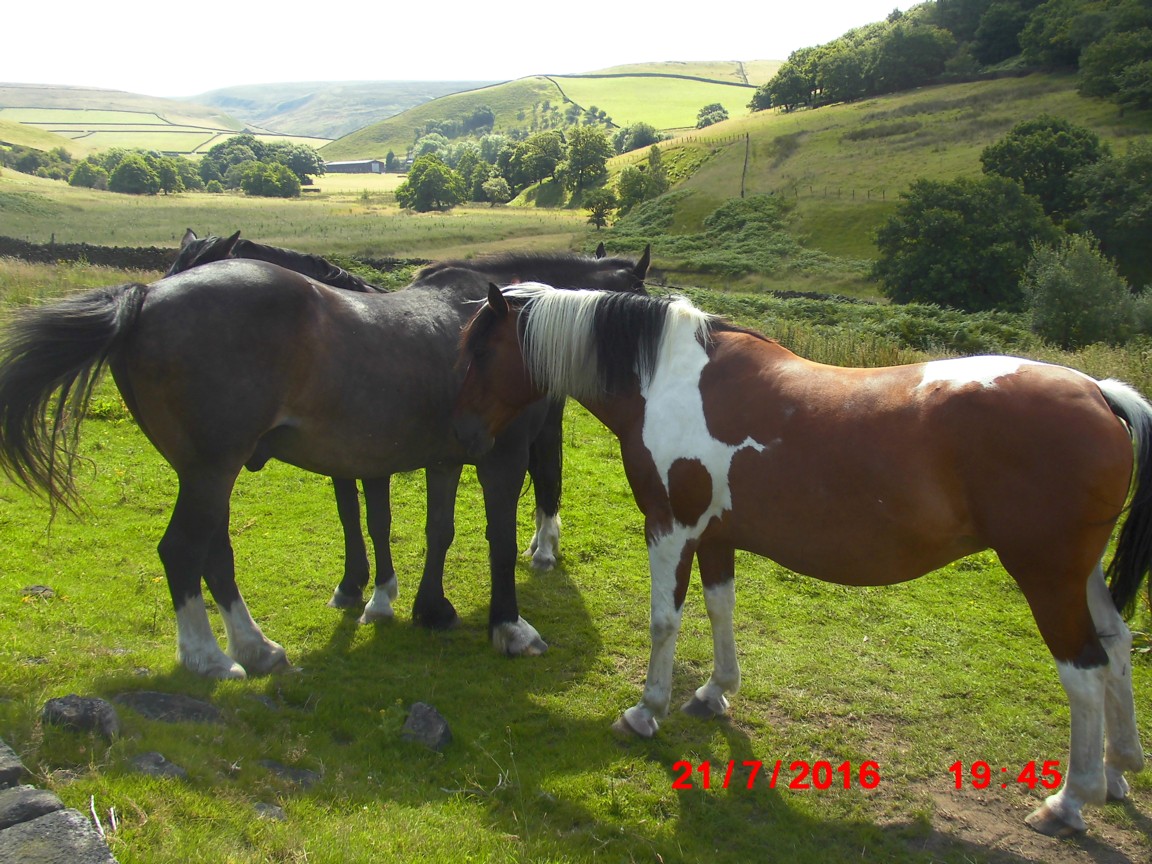
He took us on a scenic tour of nearby New Forest. And it's a very scenic forest indeed, with a rich history. It's known too for its wildlife, especially the New Forest ponies.


What ponies? Actually, we did see lots, just not when I had my camera handy.


And the Isle of Wight? Well we went to the south coast, right where you could expect a good view of said island. It was a bit cold, misty, and windy though, and the tourist here took fright.


Thursday, 1 September 2016

Remembrance of things past (like Bayswater bars and late night larrikinism)


What does a group of old London uni friends get up to when they get together for one of their occasional reunions?

Well, they check out the Bayswater pub where they tended to hang out most evenings, some 47 years ago! (It hasn't changed much on the outside, though it's well renovated inside.)


And then there's the nearby budget hotels where they were billeted. Again, looking exactly as they had du temps perdu. Only their names had changed. I remember paying about £5 per week for accommodation and meals. Admittedly it was in a rather crowded 4-bed room, but somehow that seemed fine at the time.


Then what else to do but trek south across Kensington Gardens (and the Elfin Tree, where Spike Milligan was once sighted), to South Kensington, and Imperial College. This is where some of the assembled worthies ostensibly studied all that time ago, and where all of them partied frequently.


Again, all astonishingly familiar. We peered in at the old Union Bar, scene of so much past debauchery (by others, never us, I'm sure). We exchanged tales of yards of ale competitions, the men-only policy, and of raids by the newly-formed Women's Liberation movement.

We looked down into the subterranean digs of our recently fallen comrade, John. And we looked up at the roof of the Student Union building. A regular Saturday evening pastime, after downing a pint or three of Newcastle Brown in the Union Bar, was the infiltration for free of the regular weekly rock concert. We would start in John's block, go up onto the roof via a fire escape, across and down into a girls' changing room, through there and out into the concert hall, emerging under the stage curtains somehow! No idea who discovered that route, but I wonder if they know of it today. (Only if it's on Google Maps, I suspect!)

Wednesday, 31 August 2016

Peak District perambulation


While in the north of England some old friends took me on a nice little bushwalk - OK a nice little ramble -  in the Peak District.


We started in Glossop, Derbyshire, and made our way, partly off-track, up onto the Bleaklow plateau. It's all quite scenic, up on the moors. And though the weather was fine and the hills not so high, it's easy to see how people could get lost - it's all so undulating and the weather's not always fine.


Despite the hills not being that high, many aircraft have managed to collide with them over the years. We visited the site of a 1948 crash of a US Air Force B29 Flying Fortress. The entire crew of 13 perished, and the remains of the aircraft are still scattered on the moor, serving now as a memorial.


Here's Wikipedia's piece on the area and the plane crash: https://en.wikipedia.org/wiki/Bleaklow


Tuesday, 30 August 2016

The Mill


As well as wartime nostalgia, the English are really good at showing off their industrial archeology. And there's a lot of it about, of course, what with them having invented the industrial revolution after all.


One very fine example, and well worth a visit, is the Quarry Bank Mill, near Styal in Cheshire. It was a cotton mill, and it's now a museum of the industry. It's on the Bollin River, the waters of which used to power its water wheels.

It's owned and run by the National Trust, and their volunteers were doing a fine job of showing us what it was all about.


There were lots of references too to a British TV series which had been made there, and by all accounts was an attempt to dramatise and also educate about early industrial life. It was called 'The Mill'. Reviews were mixed, I understand. Wikipedia tells me that it was well received by viewers, but Ceri Radford in The Telegraph summarised it as: "Take every cliché you can think of about the Industrial Revolution, mix them all up into one gloomy morass of woe, and that’s pretty much last night’s opening".


I liked my visit a lot. Especially those massive water wheels. Here's the National Trust page on the place:
https://www.nationaltrust.org.uk/quarry-bank