Saturday, 25 March 2017

Lane Cove Bushland Park - magic mushrooms and elusive Baza


Lane Cove Council is rather proud of its little Bushland Park, and runs lots of walks and talks about it and about the local natural environment generally.

I went along on one of these yesterday, and it made for an interesting hour and a half.
Bushland interpretation officers Michelle and Valerie did a fine job explaining the history of the reserve. It was rescued from a proposed golf course expansion a few decades back, and was placed on the Register of the National Estate in 2000, following the discovery of several fungal species found nowhere else in the world, and therefore clearly endangered.

We strolled the few hundred metres up and down the tracks beside Gore Creek, and heard about bush tucker, the different vegetative zones, the plants and the wildlife. Not so much about the fungi. This was officially not a fungus walk - the main fungus season doesn't start for another month or two. But my friends and I were subversively focusing on the ones that were there anyway!

At one point we were passing round the skull of a Tawny Frogmouth and the shrunken, dried-up lump of gunk that was a possum after it had been eaten and regurgitated by a Powerful Owl. Our group of oldies enjoyed this sort of thing just as much as the school groups also probably do.


A  mystery bird caught the attention of some of us. It was high in the trees, and my camera and its telephoto lens only yielded a silhouette black shape at the time. Back home, the much-enhanced image showed it to be a Pacific Baza, no less. I wasn't really aware of the Pacific Baza until then. It's also called the Crested Hawk, apparently.

More on the park at:
https://en.wikipedia.org/wiki/Lane_Cove_Bushland_Park

Wednesday, 15 March 2017

Bushwalkers bush-bash to Bell's Barnacles


Another new destination (for me) in the unique pagoda formation country a couple of hours north west of Sydney.

We went the other day to the Barnacles, a pair of parallel ridges in the Blue Mountains National Park. You start at the truck checking station at Bell, then bush-bash a few kilometres north and east along various ridge tops, using careful navigation.

It's a satisfying sort of walk. A well defined destination, some fine scenery, those navigational challenges, and at the moment at least, not too overgrown (because of the big 'State Mine' fire of three and a bit years ago). So it's not too exhausting a day out.

I'll go back on a sunny day sometime. It'll be quite spectacular then.


About to ascend onto the western ridge.


Emerging from the slot.


Looking across to the eastern ridge.

Friday, 10 March 2017

Now milking.......spiders!

The Australian Museum is putting on a good little show.

There's an exhibition called 'Spiders - Alive & Deadly', and it's well worth a visit. If you just find spiders fascinating, or if like us, you find them crawling around the house, and would like to better tell which ones are harmless, and which ones are totally deadly, then it's for you.


There's a daily demonstration of venom milking too. Spider venom is used for pharmaceutical and pesticide research. Spider venom contains hundreds of compounds which could be effective for all kinds of purposes.


My main interest was to improve my spider identification skills, and there was lots of material available to assist in this.

As well as live spider exhibits (where they were sometimes hiding from view of course), there were lots of dead exhibits on offer.


In Sydney, we do of course have the world's deadliest spider, the Sydney Funnel Web. That's probably disputed by the Brazilians, who have the Brazilian wandering spider, but let's be parochial for a while. We're all rather keen to be able to distinguish between our funnel webs and the other local species who sometimes look remarkably similar.


So here are the male and female Sydney Funnel Webs. The male is the deadlier, but the female's bigger.


And here are the Brown  Trapdoor spiders.

We also came across a Black House Spider in the hallway this morning, and they're a bit similar.


Below: a close-up male Sydney Funnel Web.

Monday, 6 March 2017

Our solar year


The other day it was the first anniversary of our solar photovoltaic rooftop power station. So I've now got a good idea of what you can expect from a solar installation in the Sydney region.

Our nominally 3kW system, which for various technical reasons actually delivers a maximum of 2kW, has generated a total of 4154kWh, of which we exported 3258kWh to the grid, and used 896kWh ourselves.


We imported 2944kWh, so we were net exporters. Mind you, we have to pay a lot more for the electricity we buy than we get for what we sell. So we still pay the retailer rather than vice versa. We have saved about $400 over the year though, and that's been a worthwhile return.

Here's the full year's week-by-week record. We were away in July. Otherwise consumption (and imports) were highest in winter, and solar generation was highest in spring and early summer.


Saturday, 4 March 2017

Darling Harbour reimagined


Mind you, I didn't imagine it was going to look quite like this. In the last few years they've knocked down the old Exhibition Centre at Darling Harbour and the old Entertainment Centre. In their place have arisen three new buildings.

It's all a bit confusing. They're all part of the International Convention Centre (ICC).


There's a new entertainment centre, presumably a concert hall - I haven't been there yet, but should make the effort. I failed to get to the last one ever during its 30 or so years of active life, after all.


And an exhibition centre and a conference centre too. Can't remember which is which, and the ICC website amazingly can't be bothered to tell us. Or even what ICC stands for. Fortunately there was a young lady on duty there the other day who was able to enlighten me.


Monday, 27 February 2017

Wednesday, 22 February 2017

Ice epidemic


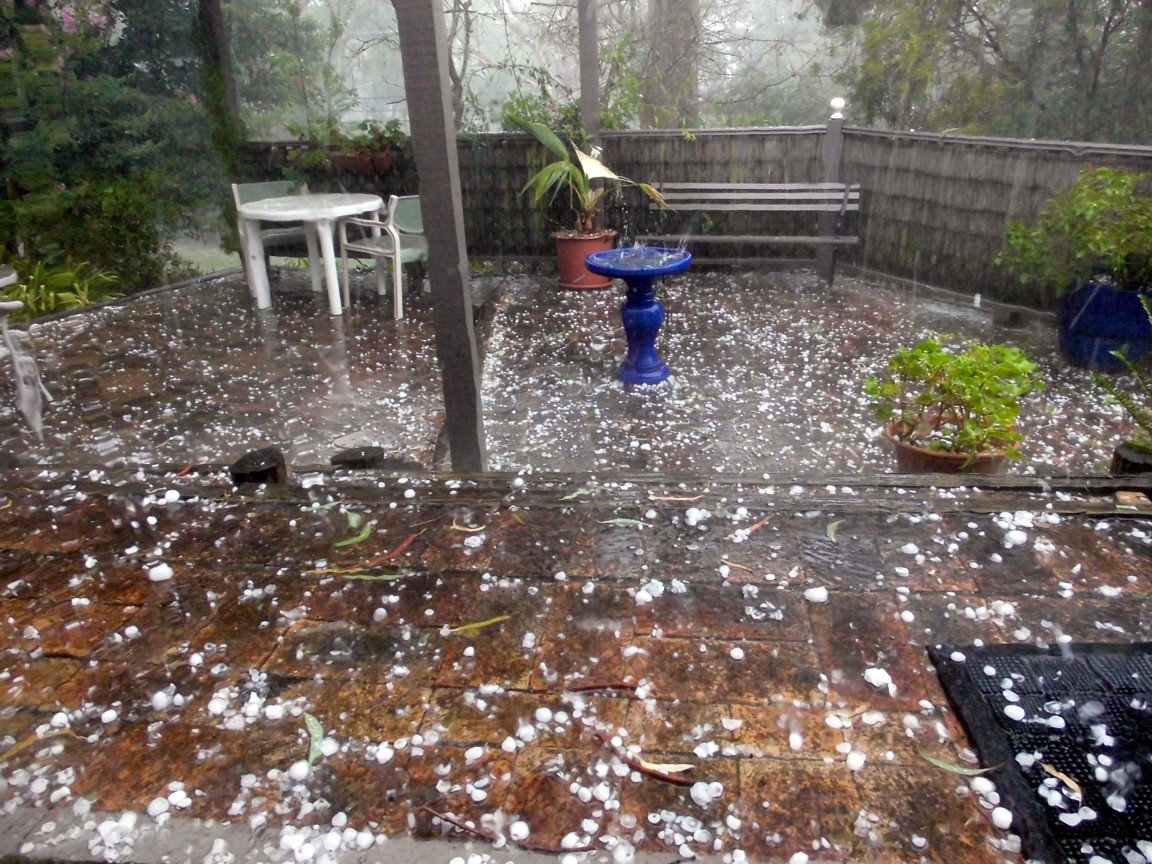
Ice as in lumps of it falling out of the sky. Otherwise known as hail.

Our suburb and others experienced a very dramatic thunderstorm the other day. It came after weeks of  record heat. We can expect more and more of these extreme weather events.

The insurance industry knows this. They have conferences about it all the time. Our insurance company is sending a builder round to check out the damage, though I suspect it could be quite a while till it's fixed - such is the scale  of the damage around here.


Hailstorms are usually rated by stone size, as in 'the size of golfballs', or sometimes oranges. Ours weren't quite golfballs, mostly grapes, with the odd small plum, but rather more solid.

One bright note: My old car (parked outside) and our solar panels (parked on the roof) seem to be quite indestructible.